Sgt. Manuel Martinez
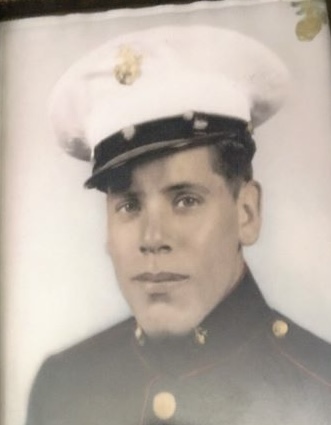
Born and raised in the rural cattle ranching communities of northeastern New Mexico, Manuel Martinez’s citizenship had more to do with the border moving over his family’s home several generations before, rather than them ever uprooting and emigrating to the United States. As a result, his devoutly Catholic family of proud Spanish and Native American heritage was very much immersed in their local culture, and the young Manuel never even uttered a word of English until the age of four. In those years he had quietly learned from other kids at the annual cattle roundup, and one day he shocked his parents when he let the cat out of the bag, pointing skyward and saying, “look at that airplane go.”

Not long after, his parents moved the short distance over the Oklahoma border, but soon returned after an opportunity arose to take up a 160-acre homestead in the now non-existent town of Moses, New Mexico. A promising idea in concept, the move coincided with the miserable Dust Bowl of the late-1930s, a series of severe dust storms caused by a harsh regional drought that ruined virtually all agriculture in the area. Moses proved to be at the very center of these storms, and the giant walls of dust clouds it produced covered everything both inside and out in layers of dirt, the sight and experience some of Manuel’s earliest memories. The family still managed to survive however, mostly thanks to very generous and community-minded neighbors that supported one another, and his father was able to eventually purchase a small gas station and store in town.
Still, survival was about all the Martinez family did. Young Manuel never remembered going hungry, but times were extremely tough and they had little. As early as ten, he was put to work operating a horse-drawn plow for various farm fields, trying to help raise sustenance or some extra funds. There were no roller-skating rinks, dance halls or organized sports here, and his family was so poor it was unlikely they could ever have utilized them even if there were. Really the only thing the kids could do for fun was to whatever they could come up with around the farm, a favorite being to swim in the muddy cattle watering holes, right alongside the large animals. When one needed a drink, they drank alongside them as well.
Another of his favorite things to do was to take ten-foot sections of discarded windmill sucker rods, the thin metal rods that the windmill’s turbines moved up and down, thus creating suction and drawing water into its reservoir. He then made loops on one end with horse hairs to create a snare, routing the length of the makeshift rope through the pipe, each of the many hairs no doubt extracted from nearby unwilling animals. Once complete, he and any other boys would then set up their traps on paths that the local grouse seemed to travel, ensuring the loop was fully spread out across the ground. Lying in the bushes nearby until one came through, they then quickly pulled the other end of the horse hair, cinching the loop around the bird’s feet. With the horse hair not strong enough to hold the captured fowl long, the boys then rushed out to grab their victim, quickly lopping off its head.

His parents never complained about what he brought in after these hunting trips, welcoming the future meal. And his parents also never thought much about the missing heads, so never bothered to inquire with the smiling miscreant just where the objects had gone that he had had been so thoughtful to remove. Had they done so, and assuming a truthful response was given in response, they would have found out that the primary reason for the bird’s sacrifice was not in fact for feeding the family. For once caught and decapitated, Manuel and his accomplices first had taken the severed heads to a neighbor’s blacksmith shop, where red-hot coals could always be found inside. The boys would throw the heads on top of the coals and let them sizzle, then throw them up in the air or at each other, even eat one or two on a dare. Manuel and his friends thought this was hilarious, and no doubt they had been run out of the blacksmith’s shop many times. “Oh my God, those poor birds,” he chuckled while giving his big warm smile many decades later, “you’d never believe the things we used to do…”
Another favorite was to sneak up on the calves that were resting in the small shelter pens out on the ranch. One day, one of the local boys decided he was going to jump on one and ride the still considerably large and now-startled animal. “We got over there, and I knew what that calf is gonna do,” he laughed as he recalled the escapade.
“Before I thought about it, sure enough, the calf went over there and the boy the other. It’s a wonder it didn’t kill that guy… I forgot to tell him [what would happen]! Oh, the things we used to do. It’s a wonder we survived…”
But that was about all there was for a young boy out in the open sagebrush country of New Mexico during the Depression, that and work. Outside of mischief around the ranch, work and school took up most of his day in his younger years. Mid-way through high school however, the household expenses proved too much to allow the children to remain in school, and Manuel was forced to drop out. He was put to work helping build dirt dams in the area, all with horse-drawn equipment, another of the New Deal government work projects. Still, while the extra income was vital to the family’s maintenance, Martinez knew he needed better for himself. So two years later he returned to high school, now legally an adult. The two years he still needed to complete meant that he would graduate at the age of twenty, in the Spring of 1941. Undaunted by the delay, he reinitiated his studies with full vigor, with plans to head off to college shortly after he had his diploma in hand.

The world had other plans. That summer he worked to save up some tuition money, then started taking classes at Highlands University in the Fall, knowing he only had enough in his pocket to get him through the semester. Pearl Harbor happened right as this term was about to end, and with no more funds left to try and defer, he knew that at his age a draft notice would soon be coming his way. With no other options, he went and signed up.
Living in such a remote area, the local recruiters had set up a bus route that collected all volunteers and draftees and brought them to Sante Fe for in-processing. There he met George Alarid from nearby Clayton. While he had no way of knowing it at the time, the two were destined to serve right alongside one another from that moment on. Once full, the bus finally headed out across the dusty roads, the latest recruits in tow.
Upon arrival at the center, each service had its own line, and the group of newcomers was directed to get into whichever one they had been assigned or desired. With that many people coming in, none of the administrative personnel there seemed to care all that much where the men went, perhaps including some that had assignments specified. “Whoever’s going Marines over here. Navy over there,” Martinez remembered of his first experience with military efficiency.
He then added with a laugh, “I don’t know why, but I just didn’t want to do anything with the Army. Biggest mistake…” The New Mexican rancher who had never even seen the ocean, let alone a large body of water for that matter, stepped into the line for the Marines. Of the entire bus he had come with, he remembered only two or three others had done the same.
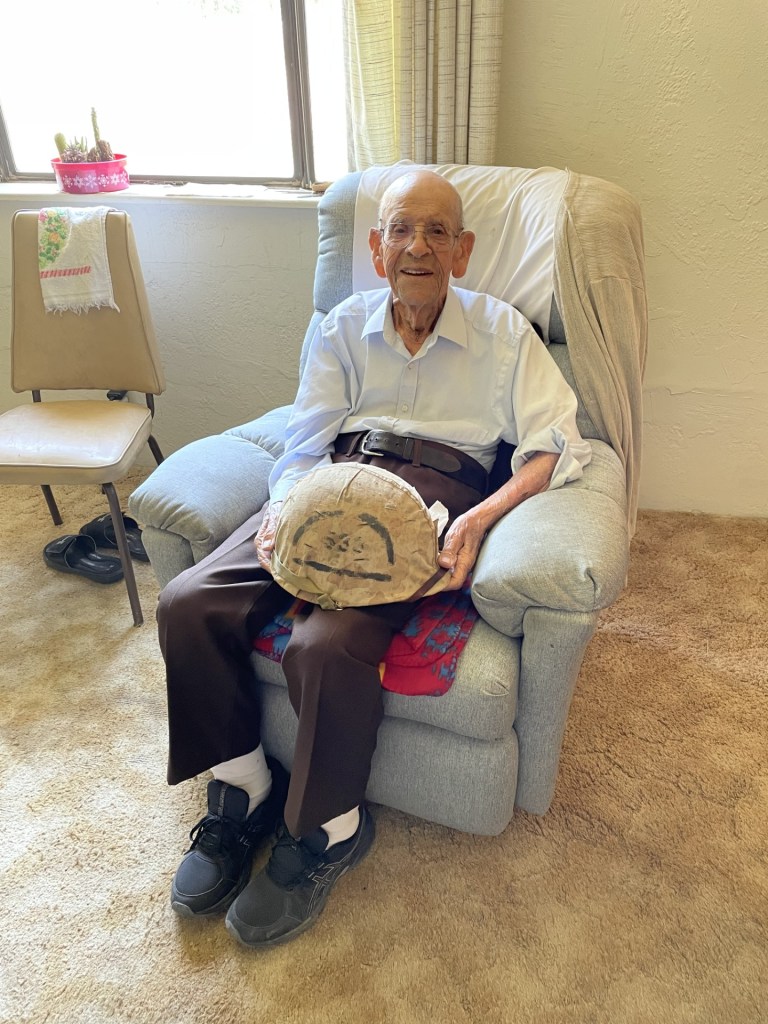
Marty was the second of the Kings the author was able to meet, interviewing him extensively on several different occasions. An original member of K Company, he fought through all of its campaigns, right at the thick of things every time. Yet somehow he made it home without a scratch. Marty’s stories alone could easily make for a book of their own…
 HOME
HOME 