Pfc. Peter Fabregas
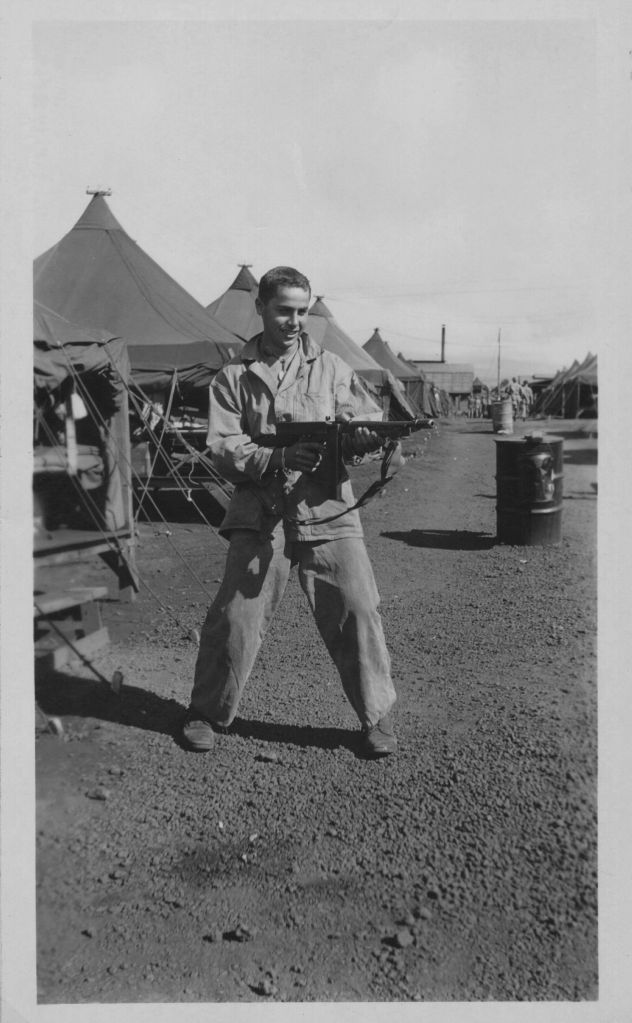
Peter Fabregas was born in New York City’s Flower Fifth Avenue Hospital in January 1926. Although Jewish by religion, his family had its roots in the Iberian Peninsula, fleeing Spain during the Inquisition and eventually making their way to Puerto Rico. There his father Pedro was born and spent his early years in training as a Catholic altar boy. The attempt at conversion did not quite take however, and Pedro and his soon-to-be wife Genevieve sailed off to start a new life in New York City. They were there when their son Peter was born, but moved a short time later to New Jersey, where they planned to settle down as more siblings came along.
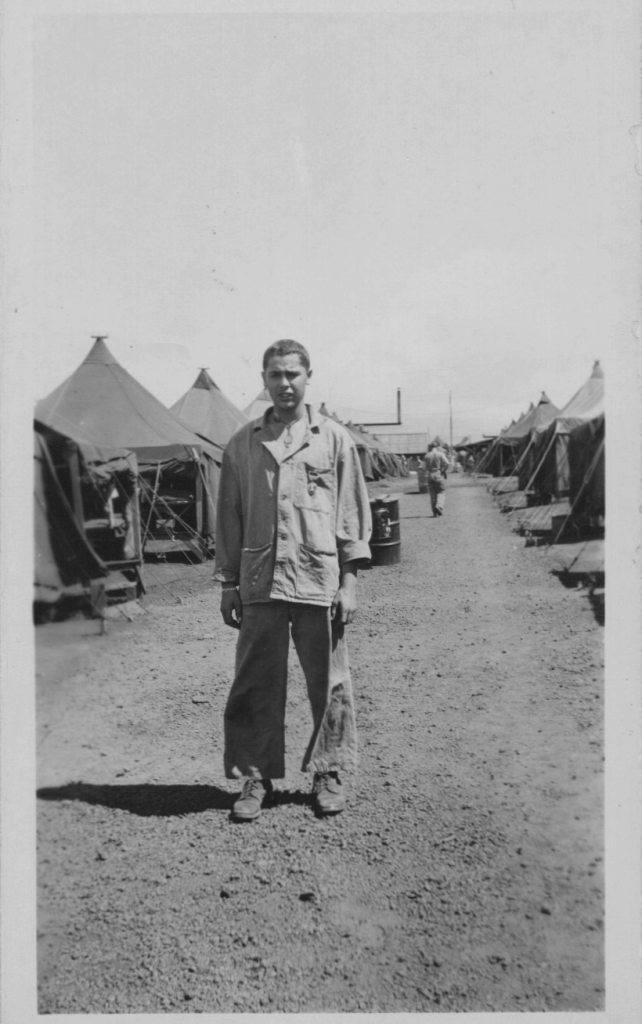
The community in Riveredge was friendly and welcoming to the new arrivals, with Pedro volunteering on the town’s fire department and from there making their circle of friends. This close community helped considerably during the Depression years, particularly in Pedro’s side business of making “soda pop” in the family’s basement. The young Peter remembered the local police chief coming over quite often, and always left with a few bottles of it in hand each time, but it was until years later when he learned about Prohibition that it dawned on him that the chief’s frequent visits had not quite been all that they had seemed.
Another close friend of the family was a Lutheran pastor that lived in the church at the center of town, another volunteer on the fire department. Every Friday evening, Peter’s mother would send him over to their house with an empty multi-use bucket and twenty-five cents, where the pastor’s wife would kindly fill it with something for the family, usually clam chowder. Peter remembered that was it delicious; the taste in no small part enhanced due to it being the only variation the poor family ever had all week, their usual meal made up of some variation of corn flakes and whatever they could augment with from what they had grown in the small garden outside.
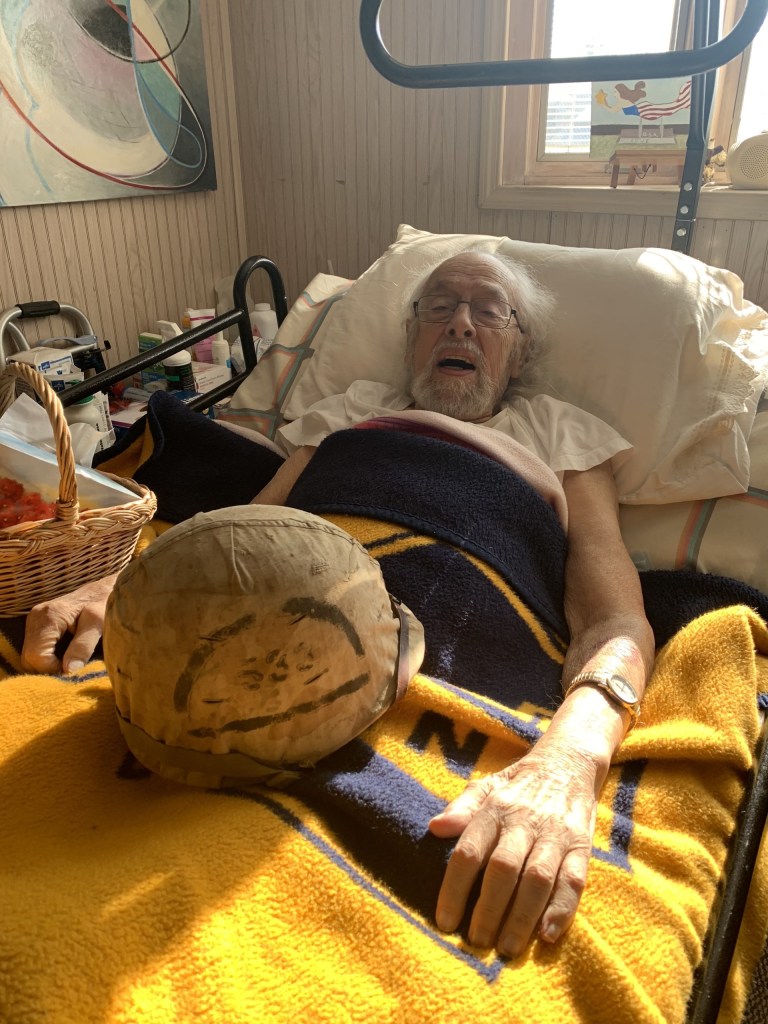
Although he did not knowing any different, Peter remembered that the Depression always made its presence felt in his family’s daily life during those years. One memory he never forgot. Walking past his parent’s room, he noticed that the door was cracked slightly out of the corner of his eye. Instinctively he looked in, noticing his father lying on his bed and staring at the ceiling, tears silently rolling down his cheeks as he dealt with one seemingly insurmountable struggle in those hard years. And the Fabregas family was not alone in those difficulties, with families all across America experiencing similar struggle.
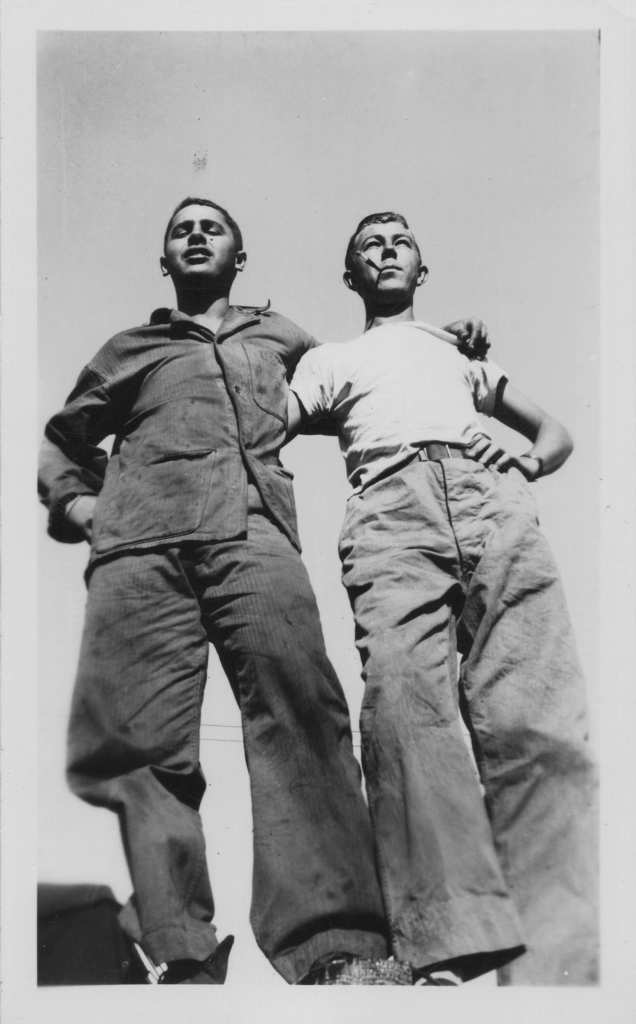
But like the other youth at the time, the young Fabregas had no choice but to shrug it off and seek out whatever typical childhood exploits he could find. Thankfully, these endeavors resulted in him still having memories of a happy childhood as he ran with the neighborhood kids, fishing off a steel bridge into the Hackensack River, enjoying crabapple fights, climbing trees or placing pennies on railroad tracks to see them flattened after a train sped by in front of them. Still, even with all the time spent out with the other kids, he still only really spoke Spanish when he arrived at school. Fortunately a patient teacher took him under his wing, spending the better part of two years to teach him enough English.
Unfortunately times were still tough, and another economic downturn in 1936 forced the family to lose their home and move to an apartment in in the city. Now a teenager, Peter remembered the new neighborhood being a complete cultural mix, the truest of melting pots. Still, that did not stop the daily street games, his favorites being dice under the street lights or stickball. Usually they were fun and relatively uneventful, but during one of these games, he remembered the game pausing as all the boys suddenly stared skyward, looking up to see the massive Hindenburg zeppelin passing low overhead, its large swastika symbols painted on its tail visible to all those below. That evening, the dirigible famously caught on fire and crashed just a few miles away.
Another vivid memory during this time was the arrival of a good number of moving containers suddenly appearing along his street throughout 1939. While people moving in and out of the neighborhood was not abnormal, he started to notice that all of the people who were unloading them spoke either German or Yiddish and only had a few things to bring in. “Of course I didn’t fully understand what was happening,” he later recollected, “but I gathered enough awareness to understand [they were] people on the run.” These were the people with enough foresight, and fortunate enough to secure visas, to heed the warning of Kristallnacht from the previous November and escape Nazi Germany. Peter paid this little mind at the time, but the memory was one he never forgot. Of course, the already diverse community quickly incorporated these people in like any of the others, but no doubt the majority of these fortunate refugees still had family back in Europe, all soon bound for extermination.
In December 2019, the author was able to locate Fabregas, the first from K Company that he was able to do so. Despite Christmas being only days away, something ate at him that he needed to get to New York immediately to meet him. Meeting one of the Kings was an amazing experience and honor, Peter and his wife Elaine so warm and welcoming. The interview there and the exceptionally-detailed personal memoir he shared will serve as a prominent part of this book.
Less than two weeks later, on New Year’s Eve, the author was sent on a no-notice deployment overseas for several months. A month later, an email arrived notifying that Fabregas had passed away.
This was one of several experiences throughout the research and writing of this book where strong urges and promptings have occurred. While not particularly religious, the author has learned to listen.
 HOME
HOME 