Pfc. Jack Adams
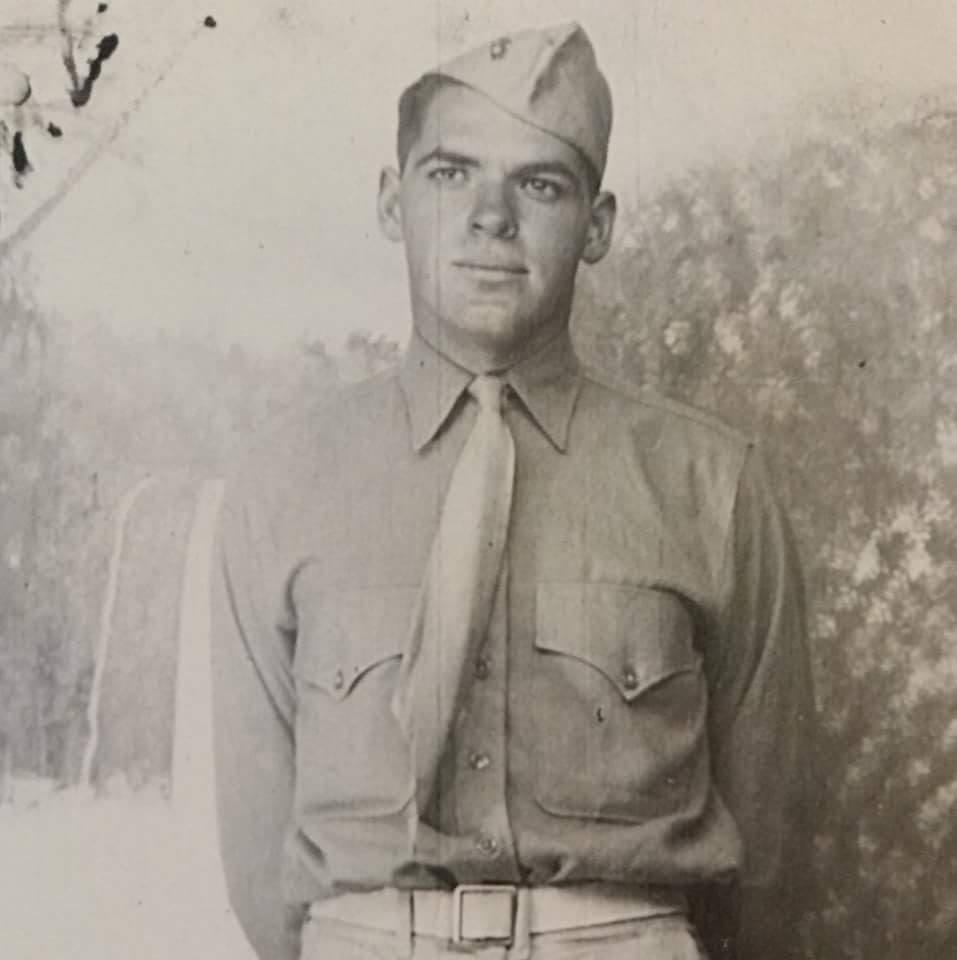
Jack Adams was in school at Iowa State College, where he was already enrolled in Army ROTC when he got the news of Pearl Harbor. He was busy studying and missed the initial news blast, only hearing about it later when his roommate came in and asked if he had heard about the attack. That caught him by surprise, he remembered, “so then I turned the radio on and we listened to that all the rest of the night.”
Anticipating the need for a significant number of officers to lead the future formations, each of the service branches began combing college campuses across the country, looking for potential candidates. Adams had just seen the newly-released “To the Shores of Tripoli” film, and the Marines he saw on the screen definitely caught his attention. Marine recruiters just so happened to come through the college not long afterwards, and Jack knew it was where he wanted to be. “All the services came through trying to get college men,” he recalled, “I saw this movie with dress blues and all the beautiful nurses. I never had a pair of [anything like] dress blues in my life. And that’s when I bit!” Convinced, he enlisted in the Marine V-12 officer program on March 6, 1942.
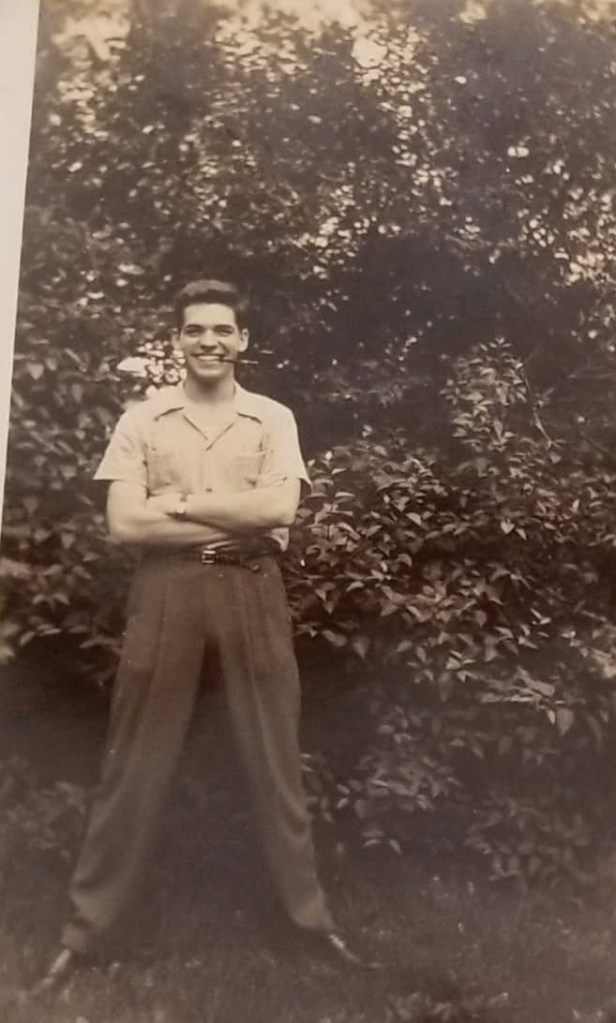
He remembered feeling like he had just played his cards right. “If you didn’t want to be sent to Europe,” he recalled of his enlistment options, “you could do that [sign up for whichever service you liked] while you were seventeen. You weren’t eligible for the draft until you were eighteen.” Not long after that however, one was at the mercy of the local draft board. The day he walked in to sign up, he almost felt sorry for the draftees he saw getting inducted:
“You’d get down there, and they’d just count off, one, two, three, four. Every tenth or whatever figure they used, why, you were in the Marines, you were in the Navy, and the rest of you were in the Army.”
Happy to have avoided that, Adams did the necessary enlistment paperwork, then the Marines there told him to stay in school, that they would call when they were ready for him. That notification took until July 1, 1943 to arrive – sixteen months later. After signing up however, he next had to go tell the Army what he had just done. “I had to turn in my ROTC uniform,” he remembered, “and when I took that over to the armory of the sergeants that was regular Army… gave me a hard time.” But eventually that unpleasant exchange finally ended and he went on his way, his mind solely focused now on becoming a Marine.
He began his studies as part of the V-12 program at Notre Dame University, until one day he abruptly received a different set of orders. Out of the blue, he was pulled in by his training cadre and questioned, then the next morning he and a handful of others were told they were out of the program and now being sent off into the enlisted ranks. “I heard afterwards that they had a quota from Washington,” he said, “they had to pick out a few people and ship ‘em off.”
He forever thought he had been selected because he had a very young appearance and was not very tall. A further strike he felt was that he did not play football, becoming an easy choice for cadre with such leanings. More likely the cause, he also remembered that during his questioning he had not answered the question of whether he wanted to be a Marine officer or not as fervently as he probably should have. Either way, he was now headed down a different path.
“Being sent direct into a basic Marine boot camp was traumatic, to say the least, for me,” he continued about the disappointing change. His earlier training did come with one small perk however:
“We didn’t have to go through the de-lousing plant.”
 HOME
HOME 